
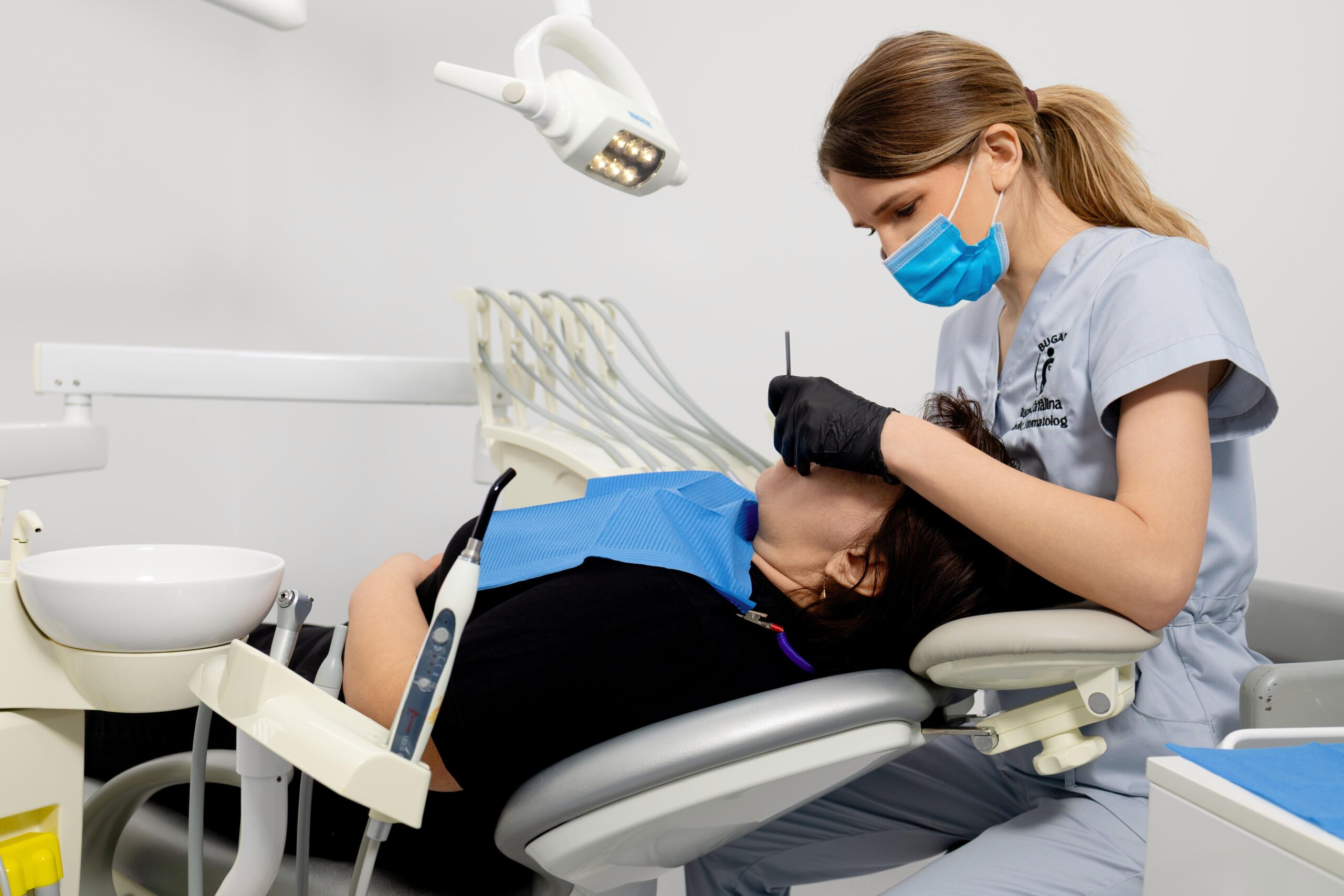
When is root canal treatment necessary?
• The decay has reached the nerve of the tooth – pulpitis (inflammation of the pulp)
• Dental abscess – infection with collection of pus
• Dental trauma that affected the pulp
• Intense sensitivity to heat, throbbing or spontaneous pain
Stages of treatment at Bugadent
1. Local anesthesia
The procedure begins with effective anesthesia. You will not feel any pain throughout the treatment.
2. Rubber dam isolation
Sterile field to prevent bacterial contamination and optimal aseptic conditions.
3. Access and removal of the pulp
The doctor opens the crown and removes the inflamed or infected pulp.
4. Cleaning and shaping the canals
Nickel-titanium rotary instruments and antibacterial solutions for complete disinfection, including curved or lateral.
5. Electronic apex locator
Precise determination of the length of each canal, for complete treatment up to the apex.
6. Obturation of the canals
Sealing with gutta-percha and special cements, preventing reinfection.
7. Final restoration
After root canal treatment, the tooth usually requires a crown for long-term protection.
- Completely painless
- Saving the natural tooth
- Modern rotary tools
- Treatment in 1-3 sessions


